

You have the power to influence how motor vehicle crashes are reported. Sign our petition to demand that the media use accurate language that holds individuals accountable for their actions. Together, we can make a lasting impact.
After signing, please share this petition with your friends and family. The more voices we have, the stronger our message becomes. Let’s work together to change the narrative around motor vehicle crashes!

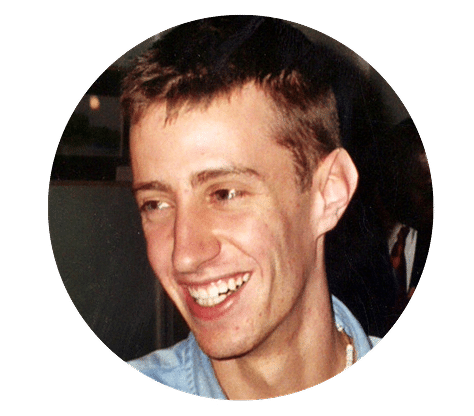
Matthew Beard was only 21 years old when he was struck by a drunk driver on December 21, 2006. An avid scuba diver and student at Florida State University, Matthew had dreams of one day becoming a marine biologist. Unfortunately, these dreams were stolen from him, as he died from his injuries just four days after Christmas.
While the media were quick to label this tragedy an “accident,” Matthew’s mother, Connie Russell, knew that it was anything but.
“Matthew didn’t have to die.”
Crash Not Accident
Accident: An unexpected happening causing loss or injury which is not due to any fault or misconduct on the part of the person injured but for which legal relief may be sought.
All too often, crashes resulting from drunk, drugged, and distracted driving are referred to as “accidents.” This is incorrect, in spite of the common misconception that if a person doesn’t intend for something bad to happen, then it’s an accident. However, the definition of the A-word makes no mention of intent — only misconduct. And when it comes to misconduct, there is perhaps none so dangerous as getting behind the wheel of a car drunk, drugged, or distracted.
The “Crash not Accident” campaign is a powerful movement demanding a change in how we talk about motor vehicle incidents. We are calling on the public and media to stop using the term “accident” and instead use “crash” to highlight the seriousness and accountability of these events. Led by victims, survivors, and their supporters, this petition emphasizes that calling it an “accident” downplays the real consequences faced by those affected. We urge media outlets to adopt this change, following the Associated Press Stylebook guidelines, to ensure a more honest and responsible portrayal of these incidents. Join us in pushing for language that reflects the truth and advocates for truth and accountability!
The campaign is supported by a diverse coalition of highway safety advocates, victim support groups, media, law enforcement, and others, all committed to eliminating the misleading and dangerous use of the term “accident” when discussing roadway incidents.
Why is the term “accident” so harmful? It suggests a lack of fault, which is often misleading. While some incidents may be faultless, approximately 93% of crashes are caused by human error. Referring to all roadway incidents as “accidents” implies innocence before investigations are completed, allowing negligent drivers to evade accountability. While accidents are often seen as unpredictable, the reality is that drunk, drugged, and distracted drivers are statistically more likely to be involved in crashes. Labeling these incidents as accidental is a misrepresentation. Our mission is to encourage the use of more accurate terminology such as crash, collision, and wreck, to better reflect the true nature of these events.
Words Matter
In the cases below, the media egregiously uses the word “accident” to describe crashes caused by drunk, distracted, and purposely violent drivers that resulted in injury and death. In what way are these accidents?
“My daughter did not deserve this,” Worley said. She’s slowly but surely finding a new normal — but Carlion Trauma Outreach Coordinator Ottilia Lewis tells us that for many people involved in drunk driving accidents, this isn’t the case. “We’ve seen a 5% increase in mortalities from motor vehicle crashes that involve alcohol,” Lewis said.
10 News
Earlier during the day of the accident, Roper engaged in high-speed driving multiple times, including one instance where he drove 135 mph in a 55 mph zone while responding to a call without turning on his lights or sirens and told his ride along passenger he was used to driving in that manner, according to the complaint.
CNN
“Chief Phan Ngo with the Sunnyvale Department of Public Safety says the alleged driver in Tuesday night’s accident has “not shown any remorse.” One of the eight people 34-year-old Isaiah Peoples injured in the possibly intentional incident was 15-year-old Miguel Balbuena.”
ABC7
Jorge Fretts, 28, is charged with homicide by vehicle, involuntary manslaughter and recklessly endangering another person in the fatal accident of bicyclist Emily Fredricks in November of 2017 near 11th and Spruce streets.”
News Radio KYW
Get Involved
- Whenever you hear somebody call such incidents “accidents,” explain to them why this is not accurate.
- Write Letters to the Editor: Submit opinion pieces or letters to local newspapers advocating for the use of accurate language regarding roadway incidents.
- When you see a news story that incorrectly uses “accident,” share it on social media with the caption “Drunk, drugged, and distracted driving crashes are not accidents” and the hashtag #crashnotaccident.
- Distribute Educational Materials: Create flyers or brochures that explain the campaign and its goals and distribute them in your community.
- Use Your Platform: If you have a blog, podcast, or social media following, use your platform to discuss the importance of this issue and encourage others to join the movement.
- Reach out to your local publications, as we did to the Minneapolis Star Tribune, to encourage them to use correct word choice.
- Like us on Facebook and follow us on Twitter and Instagram for updates about Crash Not Accident.
Together, we can change they way we think and speak about drunk, drugged, and distracted driving and save lives.
Examples of Correct Word Choice

Thank you to the Iowa DOT for this great sign